


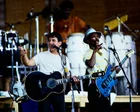
FORTY years on, Paul Simon’s Graceland still sounds like it arrived from nowhere — and, in a way, it did. The album’s spark came from a bootleg cassette of mbaqanga (accordion-heavy South African township pop) that Simon listened to on drives from Manhattan to Montauk while his career and personal life were wobbling.
In summer 1984, Simon was 43, coming off a blockbuster Simon & Garfunkel tour that ended in bickering. His last two albums hadn’t sold well, and his marriage to Carrie Fisher was starting to unravel. Somewhere between building a beach house at the far end of Long Island and replaying that tape, the shape of Graceland began to form.
The record became a globe-hopping patchwork: South African grooves at the core, plus a Louisiana detour to record with zydeco group Rockin’ Dopsie and the Zydeco Twisters, and Los Lobos bringing their norteño-rock blend to All Around the World or the Myth of Fingerprints. Ashley Kahn, whose new book Days of Miracle and Wonder digs into the album’s making, calls it Simon’s most “nimble” and ecstatic work.
Simon booked jam sessions in Johannesburg with bands including General MD Shirinda and the Gaza Sisters, Tao Ea Matsekha and the Boyoyo Boys, while engineer Roy Halee captured the parts. Simon would build melodies and lyrics on top — sometimes over already-finished songs, like Gumboots, which he’d first heard as an instrumental. Kahn describes it as a major shift for a writer who usually started with an acoustic guitar: building “from the rhythm up”, a beat-first approach he likens to hip-hop.
But apartheid wasn’t a distant backdrop — it pressed in at night, when Black musicians weren’t allowed on the streets or to use public transport. Simon later told Rolling Stone that sessions hit an “uncomfortable” point as players worried about getting home. He was also warned that recording there could violate the United Nations’ 1980 cultural boycott; later, the UN’s special committee against apartheid censured him and planned to add him to a list of boycott violators, before reversing course after Simon wrote that he understood the ban applied to performing, not recording, and that he didn’t intend to perform in South Africa.
Kahn says Simon wanted musicians credited and compensated, adding that Simon paid the South African players triple the daily rate of American union musicians. Still, Simon has faced backlash over the years about Graceland songwriting credits from musicians on the album, including Los Lobos, Rockin’ Dopsie and the Zydeco Twisters, and guitarist Ray Phiri, who helped construct the title track. Fans have long argued the album helped acts like Ladysmith Black Mambazo reach a wider audience.
When Graceland landed in late August 1986, it wasn’t instantly massive. It entered the Billboard 200 at No 94 in September, later peaking at No 3 the following April, just after the Grammys. Critics, Saturday Night Live performances and awards helped — and eventually radio got on board with You Can Call Me Al. As Kahn puts it, programmers didn’t know where to “cage” it: “It was a damn unicorn.”
Days of Miracle and Wonder: Paul Simon and the Trials and Triumphs of Graceland by Ashley Kahn is out now.
Can Graceland be both a musical masterpiece and a complicated ethical flashpoint — or do you have to pick?
3 comments · real people, real opinions