
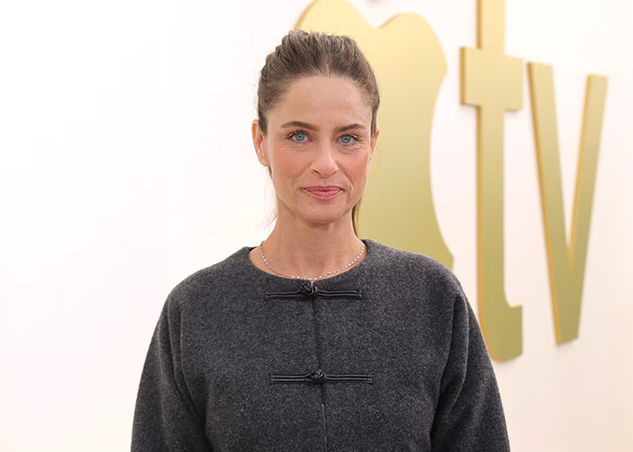
AMANDA Peet is candidly sharing details of a deeply difficult chapter in her life.
In a new essay published March 21 in The New Yorker, the actress revealed that she was recently diagnosed with breast cancer while also coping with the final months of both of her parents in hospice care.
Peet wrote that she had long been told she has “dense” and “busy” breasts, leading to regular monitoring with a breast surgeon every six months.
After a routine scan in late August showed an unusual ultrasound result, doctors performed a biopsy that found a tumour.
An MRI was then ordered to determine the extent of the disease.
At the same time, Peet said her parents, who were divorced and living on opposite coasts, were both declining in health.
She recalled flying to New York after her father’s condition worsened, though he died before she arrived.
Back in Los Angeles, Peet received encouraging news about her own diagnosis: her cancer was hormone-receptor-positive and HER2-negative.
She later learned that a second mass found in the same breast was benign, and that she would not need chemotherapy or a double mastectomy.
Peet also reflected on an emotional final moment with her mother, who had Parkinson’s disease, describing how she climbed onto her mother’s hospital bed to comfort her and hold her gaze.
The actress, known for films including Something’s Gotta Give and the series Your Friends and Neighbors, shares three children with husband David Benioff.
By speaking publicly, Peet adds her voice to a growing number of stars who have shared their cancer journeys and highlighted the importance of screenings, monitoring and support during treatment.